
Hey travelers, Homo Faber Venice 2026 has begun. Venice has always been a city shaped by light-the way it bends across the lagoon, filters through blown glass, and carves shadows into centuries-old stone.
This September, that relationship between light and the human hand takes centre stage as Homo Faber 2026 transforms the island of San Giorgio Maggiore into a month-long celebration of craftsmanship, creativity, and material mastery.
In this guide by Venice Insider Guide - Here is everything you need to know before you go.
Homo Faber in Venice 2026: What to know
- Homo Faber Venice 2026: An Island of Light runs from 1–30 September 2026 at Fondazione Giorgio Cini on San Giorgio Maggiore, Venice. The venue is open daily 10:00–19:00 (last admission 17:00). Note that the free Homo Faber Shuttle will not operate between 14:15 and 19:15 on 6 September due to the Regata Storica.
- Es Devlin serves as artistic director for this fourth Homo Faber Biennial, structuring the exhibition around approximately 15 immersive installations and hundreds of handcrafted objects that explore the relationship between light, materials, and the human hand.
- Tickets are available from spring 2026 via the official website, with timed entry slots, concessions for students and seniors, and combined offers for satellite venues. Free partner locations such as Casa Sanlorenzo extend the experience across the city.
- Over 500 master artisans from more than 70 countries participate through live demonstrations, talks, concerts, and curated itineraries through Venetian workshops, making this a genuinely global craft event.
- Homo Faber 2026 positions contemporary craftsmanship as a driver for culture, design, and a more sustainable future-cementing its place as a landmark in the global craft calendar.
Homo Faber 2026: An Island of Light in Venice
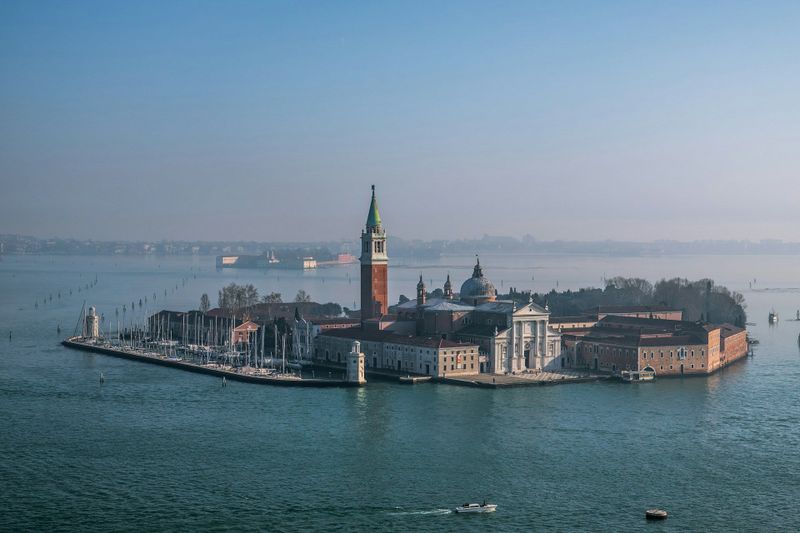
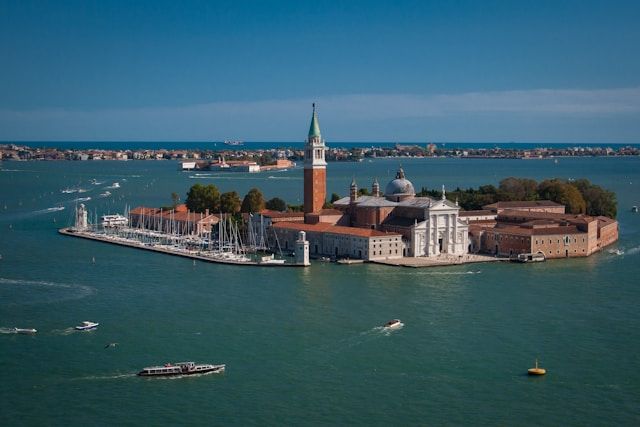
Picture Venice in early September: the summer heat loosening its grip, the lagoon glowing amber at dusk, and vaporetti cutting white lines toward an island that Palladio turned into a masterpiece of proportion and light. Now imagine that island-San Giorgio Maggiore-reimagined as a series of glowing, darkened, and reflective spaces where the finest handcraft from around the world is revealed by light itself.
That is the premise of Homo Faber 2026, the fourth edition of the Homo Faber Biennial. Running from 1–30 September 2026, it occupies the full breadth of Fondazione Giorgio Cini: cloisters, galleries, gardens, refectory, and the Piscina Gandini water basin. Doors open daily at 10:00 and close at 19:00, with last admission at 17:00. A dedicated free shuttle departs every 30 minutes from San Marco–San Zaccaria (Pier B1) starting around 9:30, returning from San Giorgio until 19:15-except on 6 September 2026, when navigation across the Bacino di San Marco is suspended between roughly 14:15 and 19:15 for the annual Regata Storica.
The theme, "An Island of Light," explores how light interacts with glass, textiles, metals, ceramics, paper, and digital media. Artisans use illumination to reveal texture, colour, and craftsmanship; visitors move through a curated journey of approximately 15 immersive installations, each designed as a chapter in a larger narrative about what the human hand can achieve when guided by skill and knowledge.
Venice is historically a nexus for trade and artistic exchange, and the event leans into that identity. The 2024 edition featured 10 themed spaces celebrating human life under the banner "The Journey of Life." The 2026 edition shifts focus to light as both material and metaphor-for memory, for the transmission of skill, and for the knowledge embedded in every handcrafted object. Homo Faber 2026 showcases hundreds of handcrafted objects: over 500 artisans from more than 70 countries contribute more than 700 works across the exhibition, many of them created specifically for this edition.
The event of the Homo Faber Venice 2026 is curated by the Michelangelo Foundation for Creativity and Craftsmanship, and the programming blends exhibitions, live demonstrations, concerts, talks, and special events spread across the architectural landscape of Fondazione Giorgio Cini. The event aims to bridge traditional artisan techniques with contemporary design, and to highlight the cultural importance of craftsmanship in a world increasingly shaped by automation and mass production.
Visitors can expect a route through around 15 major installations-including environments such as A Language of Hands, An Infinite Birdsong (featuring mirrored surfaces and handmade birds in porcelain, glass, metal, and paper), A Luminous Ark (suspended paper sculptures by Chinese paper artist Wen Qiuwen), and A Full Moon Rising (the Piscina Gandini reimagined as a reflective, ambient water space). More intimate rooms are dedicated to specific craft disciplines: Venetian glass, contemporary metalwork, handwoven textiles, innovative lighting design, and more.
Tickets for Homo Faber 2026: An Island of Light went on sale in spring 2026 via the official Homo Faber website. Full-price tickets are €16; reduced tickets (€10) are available for students, over-65s, Venetians, and families. Children, people with disabilities, and accredited tourist guides enter free. Time-slot reservations are required, and advance booking is strongly recommended for peak weekends.
Homo Faber Venice 2026 Programme Highlights and Craft Experiences Across Venice
The program of the Homo Faber Venice 2026 extends well beyond San Giorgio Maggiore. Across the city, more than 20 exhibitions, performances, lectures, and concerts celebrate Venice's craft heritage and the global craft community throughout September.
Beyond the main island venue, Homo Faber 2026 activates partner locations across Venice-historic palazzi, restored gardens, contemporary galleries, and working ateliers-creating a city-wide map of craftsmanship. This city-wide programming, called Homo Faber in Città, connects some 140 artisan workshops that open their doors to the public during September. Fondazione Cologni contributes to this broader network, reinforcing the commitment to making craft visible and accessible throughout the city.
Craft disciplines on display range widely:
- Mosaic and terrazzo linked to Venetian architecture
- Murano glass and mirror-making, including live furnace work
- Bookbinding, letterpress printing, and marbled paper
- Fine instrument making and restoration
- Slow fashion and handwoven textiles
- Experimental design collaborations between master artisans and contemporary designers
- Ceramics, lacquerwork, and leathercraft
A specific partnership with the JSW Foundation brings 30 Indian creators and ateliers to the world stage, underscoring the event's global reach and its commitment to showcasing talent from beyond Europe.
Live demonstrations and participatory workshops are scheduled throughout the biennial. Visitors can watch artisans at work, ask questions, and in selected cases try techniques themselves under supervision-simple glass engraving, basic paper marbling, or origami in the A Luminous Ark installation. Culinary experiences also enhance the immersive journey at Homo Faber 2026, weaving food craft into the broader exhibition narrative through cafés and curated tastings on-site.
Student and emerging-talent features are central. Ninety Young Ambassadors-selected from design schools and academies worldwide-serve as guides and presenters, embodying Homo Faber's role in bridging master artisans and the next generation. Dedicated exhibition spaces for work from design schools further emphasize this intergenerational exchange.
Plan to spend at least a full day at San Giorgio Maggiore, and set aside another day or two to discover the workshops and events scattered across Venice's sestieri.
Planning Your Visit to Homo Faber Venice 2026
This section is your practical guide to getting the most out of September 2026 in Venice. Short paragraphs, clear details, and actionable steps-everything you need to plan confidently.
Ticketing
- Tickets are available online via homofaber.com
- Full price: €16 | Reduced: €10 (students, over-65, Venetians, families)
- Free admission for children, people with disabilities, and accredited guides
- Timed entry slots are mandatory; book in advance for peak weekends (especially around 6 September)
Getting to the Venue
Fondazione Giorgio Cini sits on San Giorgio Maggiore, roughly five minutes by boat from Piazza San Marco. You can reach it via public vaporetto lines or the dedicated free Homo Faber Shuttle, which departs every 30 minutes from San Marco–San Zaccaria (Pier B1) starting at 9:30, with return shuttles running until 19:15.
On 6 September 2026, the shuttle will not operate between 14:15 and 19:15 due to the Regata Storica. Plan your visit to the island accordingly-arrive early or stay for the evening.
On-site facilities include information desks staffed by multilingual Young Ambassadors, cafés and restaurants (no outside food or alcohol permitted), a bookshop, and lift access for visitors with reduced mobility. Strollers are permitted, and guide dogs are welcome.
Casa Sanlorenzo (Partner Venue)
- Free entrance from 1–30 September 2026
- Open daily 10:00–19:00, last admission 18:00
- Two exhibitions: one focused on artisans from Venice and the Veneto (curated by Artemest), another showcasing Luxembourg craft (curated by De Mains De Maîtres Luxembourg)
- A priority lane is available for visitors holding a valid Homo Faber 2026 ticket for the same day
Artisans Across Venice
Visitors can explore active Venetian artisanal workshops throughout the city during September, observing working tools, techniques, and materials first-hand. The Homo Faber Guide identifies approximately 140 workshops across districts such as Dorsoduro, Cannaregio, and Castello. Online itineraries help plan walking routes that connect these ateliers into a coherent day of discovery.
Combining with Venice's Broader Cultural Offer
Allocate at least one full day for the San Giorgio Maggiore site and another for partner venues and workshops. Evenings can be reserved for concerts or talks included in the programme. If you can spend three or four days, you will have time to discover the full scope of what Homo Faber in Città offers alongside Venice's museums, architecture, and dining.
As you leave San Giorgio Maggiore after dark, the lagoon carrying the last reflections of the installations behind you, what stays is not just the memory of illuminated rooms and hundreds of remarkable objects. It is the sound of workshops still humming, the sense of connection to a global community of makers, and the quiet conviction that the work of the human hand-patient, precise, luminous-still matters profoundly.
Frequently Asked Questions
Is Homo Faber Venice 2026 suitable for children and families?
Yes. Many installations are designed to engage younger visitors through light, movement, and colour. Selected days feature family-friendly workshops-such as origami and basic paper marbling-and guided tours adapted for children. Strollers are permitted on-site, though care should be taken in crowded gallery spaces. Children enter free of charge.
How much time should I plan for a visit to Homo Faber 2026?
Allocate at least half a day (two to three hours minimum) for the main exhibition route at Fondazione Giorgio Cini. If you want to attend talks, watch live demonstrations, or participate in workshops, plan a full day. Add one or two additional days to explore partner venues like Casa Sanlorenzo and the artisan workshop itineraries across Venice's sestieri.
Conclusion
So, Homo Faber in Venice 2026 is amazing! Yes, because "An Island of Light" highlights how light interacts with certain materials in particular, such as glass, textiles, metals, ceramics, paper, and digital media. Additionally, artisans use lighting to reveal textures, colors, and craftsmanship.
Remember: from 1–30 September 2026 at Fondazione Giorgio Cini on San Giorgio Maggiore, Venice.
Follow us Venice Insider Guide!