
Hey travelers, are you looking for German Pavilion Venice Biennale 2026? You're in right place.
The German Pavilion at the Venice Biennale 2026 carries forward one of contemporary art's most politically charged traditions. Titled "Ruin," this year's exhibition by Henrike Naumann and Sung Tieu turns the pavilion's Nazi-era architecture into a canvas for confronting memory, migration, and the unfinished business of German reunification.
Here is everything you need to know about the pavilion's artists, its layered history, what to expect when you visit, and practical information for visiting the Biennale di Venezia is included, along with a FAQ section covering typical planning and research questions. Let's find out in this post by Venice Insider Guide with us photos.
The German Pavilion 2026 - Ruin: Context, Schedule and Expectations
The 61st Venice International Art Exhibition opened to the public on May 5, 2026, with Germany once again presenting a new commission at its pavilion. The German Pavilion at the Venice Biennale 2026 runs from May 9 to November 22, 2026, spanning roughly seven months of public access.
The exhibition of the Germany Pavilion Venice Biennale 2026 is titled "Ruin" and curated by Kathleen Reinhardt, director of the Georg Kolbe Museum in Berlin.
The title "Ruin" plays on meanings in both English and German, evoking physical decay, historical collapse, and active processes of destruction and transformation. Sung Tieu and Henrike Naumann are the featured artists for the German Pavilion Venice Biennale 2026.
The Germany Pavilion Venice Biennale 2026 should be read in continuity with recent contributions by Naumann and Tieu, and with critical precedents like Hans Haacke's 1993 intervention. Debates about nationalism, decolonization, and migration have shaped the curatorial direction, and Reinhardt has framed the German Pavilion Biennale 2026 as a "topography of resistance" where past, present, and future collapse into a single, polyphonic space.
Naumann passed away in February 2026, shortly before the Biennale opening, adding an emotional dimension to the reception of the joint exhibition.
What Is the German Pavilion Venice Biennale 2026?
The German Pavilion is Germany's official national pavilion at the Venice Art Biennale, located in the Giardini della Biennale. It is one of the oldest and most scrutinized national pavilions on the Biennale grounds, and it carries an architectural weight that few other pavilions share.
The Federal Foreign Office commissions the German contribution to the Biennale, working in cooperation with ifa – Institut für Auslandsbeziehungen, which handles organization, funding, press coordination, and international cultural diplomacy. Key facts at a glance:
- Every two years, the Deutscher Pavillon hosts a new exhibition representing contemporary art from or about Germany.
- Exhibitions frequently carry a strong political and historical orientation, engaging the building's own contested past.
- The Deutscher Pavillon Venice Biennale serves as a testing ground where art, architecture, and national identity collide on an international stage.
German Pavilion Venice Biennale 2026: Henrike Naumann and Sung Tieu
Henrike Naumann and Sung Tieu are the two artists whose work defines the German Pavilion Biennale in 2026. Their combined practice exemplifies how contemporary art confronts East German history, racism, and right-wing violence through material, spatial, and sensory means.
Henrike Naumann
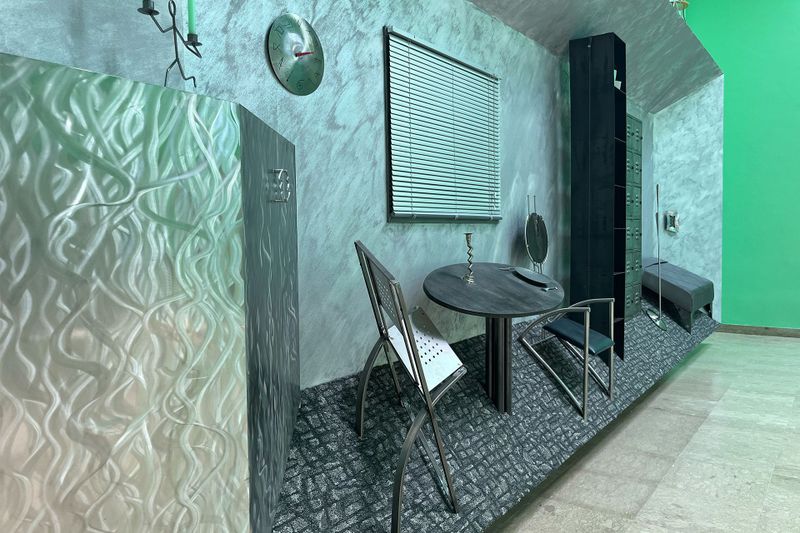
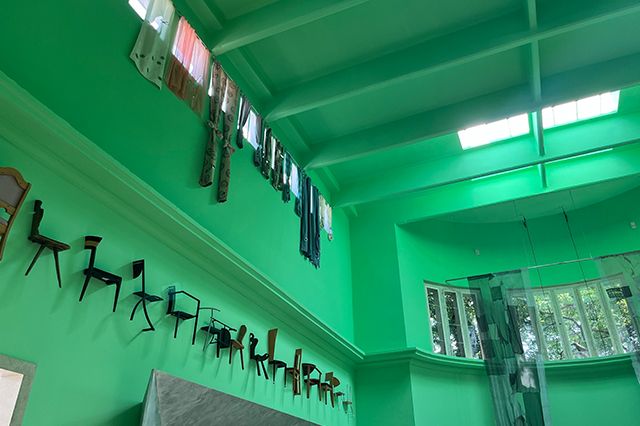
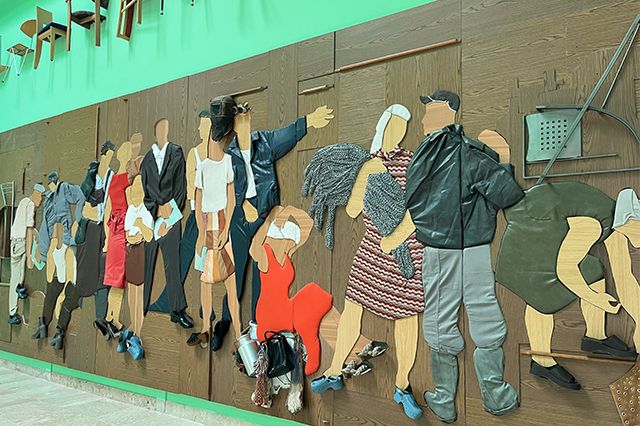
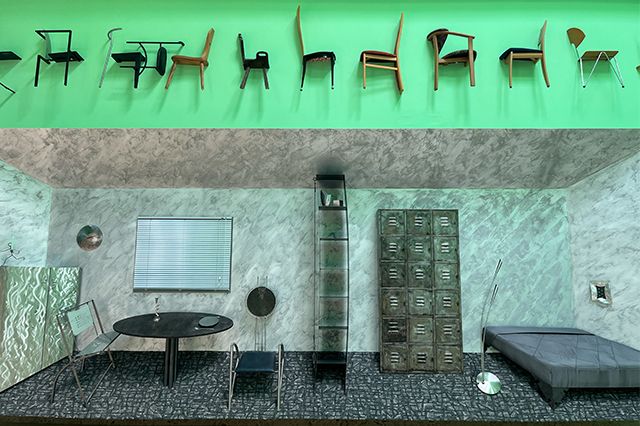
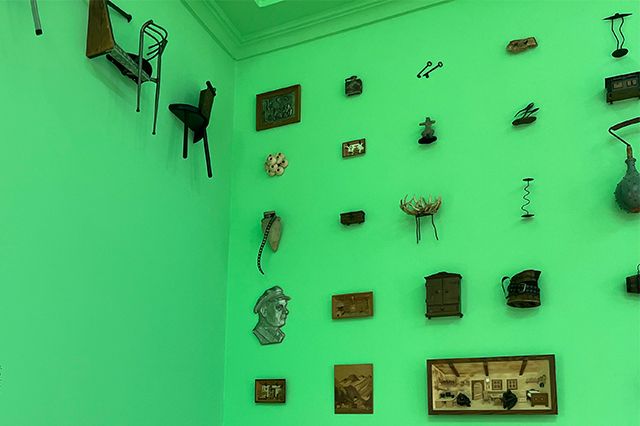
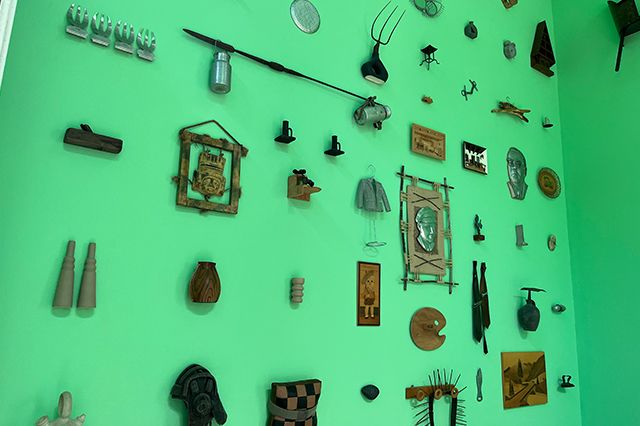
Henrike Naumann reflects on post-1989 East German interiors, right-wing subcultures, and consumer design. Her installations stage furniture and personal everyday aesthetics as cultural artifacts, revealing how taste and interior design encode German ideologies. For Venice, her work is titled Die Innere Front (The Inner Front), a scenographic installation in the pavilion's main rotunda featuring sofas, chairs arranged as reliefs, curtains, and upholstered elements referencing "New German Design" and Socialist Realist mural motifs-including one hidden behind drywall in Chemnitz. The mint-green backdrop references former Soviet barracks. Naumann's installation focuses on the politics of domestic space and social upheaval, treating the home front as a literal and figurative battleground.
Her work also addresses the burning sunflower house and opposing political opinions that emerged during the violence against asylum seekers in the early 1990s, linking the artist's childhood home experiences to broader socio political issues of the reunification period.
Sung Tieu
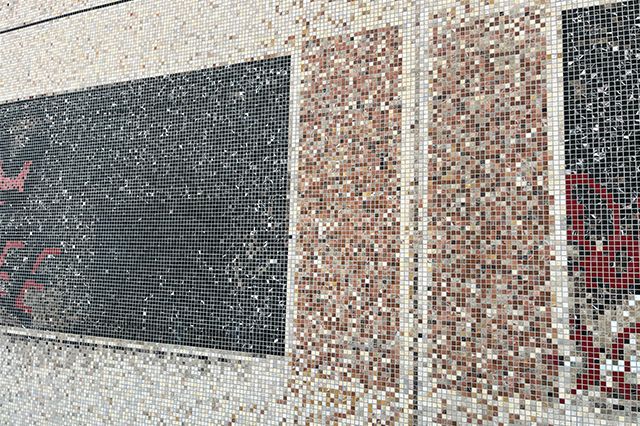
Sung Tieu works across sculpture, found objects, archival material, drawing, and scent. Her practice investigates her family biography-her mother's experience as one of many Vietnamese contract workers in East Germany-and how state systems inscribe themselves on body and space. For 2026, her major work is titled Human Dignity Shall Be Inviolable, invoking Article 1 of Germany's Basic Law. Sung Tieu envelops the pavilion's façade in over three million mosaic tesserae, depicting at 1:1 scale a prefabricated socialist housing block on Gehrenseestraße in East Berlin where Tieu lived-a building now slated for demolition, a demolished palace of socialist-era collective living. Tieu's work features a trompe-l'œil mosaic on the pavilion's facade, merging the physical and social structures of East German housing with the monumental Nazi-era architecture beneath.
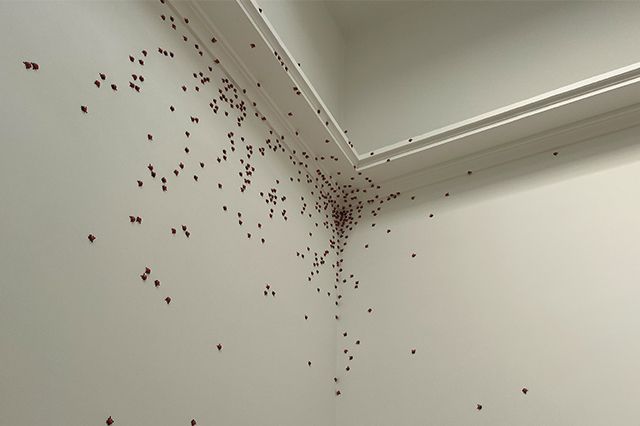
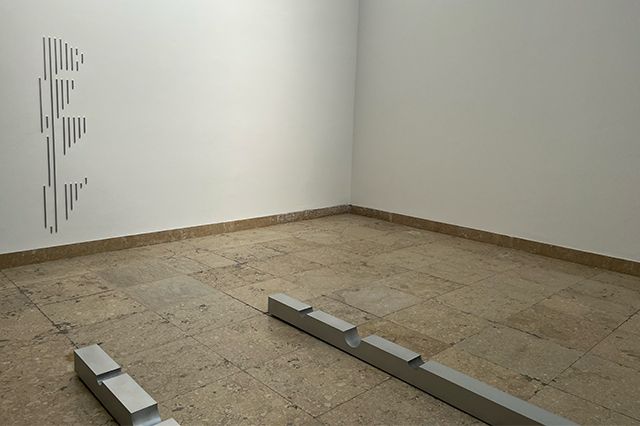
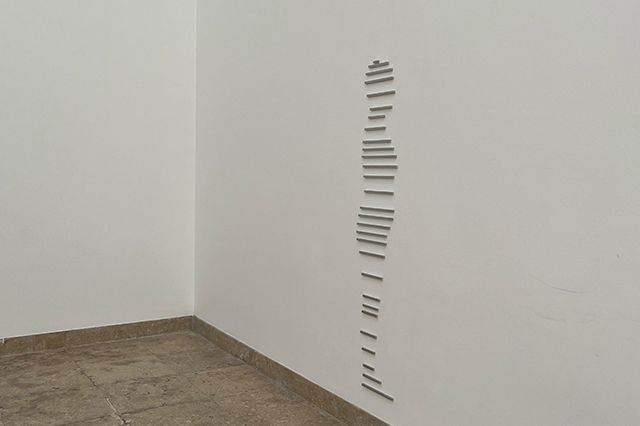
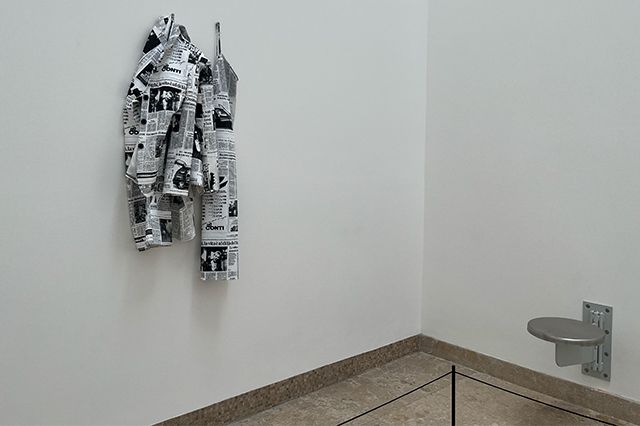
Inside, her works include sculptures, stools remade in wood from immigration facility furniture, and bodily forms in glass referencing phenomena like phrenology and administrative control over bodies.
The collaborative framework Naumann and Sung Tieu addresses how both physical and social structures carry ideology, examining the archaeological prehistory of the building alongside present-day exclusion.
Visiting the German Pavilion at the Venice Biennale 2026
The German Pavilion Venice Biennale 2026 is located in the Giardini della Biennale in Venice, alongside other national pavilions from countries around the world.
The German Pavilion Biennale 2026 runs from May 9 to November 22, 2026. Exact ticketing details and schedules for performance events like TRÜMMERFRAU are:
- TUE - SUN: 09/05 > 30/09 _ 11 AM - 7 PM; 01/10 > 22/11 _ 10 AM - 6 PM
- at the Giardini
- Admission with ticket
Practical tips for your visit:
- Arrive early to avoid queues, especially during the first weeks and around press preview days.
- Combine your visit with nearby pavilions in the Giardini to make the most of your time.
- Allow time to read. The exhibition includes archival materials, wall texts, and references that reward slower, more attentive viewing.
- Accessibility: Be prepared for steps and potential queues. Multilingual wall texts and printed guides are increasingly standard at the German Pavilion Venice 2026.
The nature of the installation-layered references to East Germany, the Berlin Wall era, and contemporary migration-demands patience. This is not a pavilion you rush through.
Significance of the German Pavilion Venice Biennale 2026: Why It Matters
The German Pavilion Venice Biennale 2026 remains one of the most closely watched national presentations at the Biennale di Venezia, particularly in politically turbulent times. The Deutscher Pavillon 2026 challenges narratives of German history and reflects on political memory, functioning as a barometer for debates within Germany about memory, nationalism, migration, and Europe's role in the world.
Key names-Henrike Naumann, Sung Tieu, Hans Haacke, Philip Rizk (a figure linking art, activism, and film), Liam Gillick, and curators like Kathleen Reinhardt and Florian Ebner-form a broader genealogy of critical, research-driven art. Their collective work insists that the German Pavilion Venice Biennale 2026 is not a space for celebratory nationalism but for contestation, excavation, and repair.
The 2026 edition will be interpreted both as a unique exhibition and as another chapter in an ongoing project: rethinking what a "Deutscher Pavillon 2026" can or should be at the Biennale di Venezia. In a year marked by war, displacement, and rising authoritarianism across Europe, the questions posed by "Ruin"-about human dignity, about what structures we build and what we let collapse-are anything but academic.
Whether you visit in Venice or follow remotely through press documentation and critical writing, the German Pavilion in 2026 rewards close, sustained attention. Keep an eye on the official deutscher-pavillon.org site for updates, performance schedules, and new publications.
German Pavilion Venice Biennale 2026: Architectural & History
The German Pavilion Venice Biennale is a contested neoclassical building whose architecture has become inseparable from its artistic discourse. Artists do not simply exhibit inside it-they wrestle with it.
The German Pavilion was built in 1909. Daniele Donghi designed the pavilion in a neoclassical style, and it was initially known as the Bavarian or Munich Pavilion. The pavilion originally displayed Munich Secession works, situating it within early twentieth-century European exhibition culture.
In 1938, Ernst Haiger redesigned and reopened the pavilion under the Nazi government. Germany's pavilion was inaugurated by the Nazi government in 1938, gaining a monumental façade, a high portico, and a heavier interior aligned with National Socialist aesthetics. After 1945, external symbols like eagles and swastikas were removed, but the fundamental architectural shell-its symmetry, scale, and rhetorical grandeur-remained intact.
Post-war debates have periodically surfaced about whether to demolish, radically transform, or critically engage with this Nazi-era architecture. Most artistic projects since the 1960s have chosen to confront the building's history head-on, making the pavilion itself a medium. The pavilion transforms architectural history into a site of artistic exploration, and each new edition must negotiate the tension between the building's oppressive past and its potential as a space for critical thought.
FAQ: German Pavilion Biennale 2026
When will the German Pavilion at the 2026 Biennale di Venezia be open to the public?
The German Pavilion Venice Biennale 2026 follows the official dates of the Venice Art Biennale. For 2026, it runs from May 9 to November 22. There are usually a few preview days for press and professionals before the public opening. Check La Biennale di Venezia's website for the exact 2026 calendar and any schedule changes for time-based elements like the TRÜMMERFRAU performance.
Is the German Pavilion 2026 exhibition suitable for visitors without specialised art knowledge?
Although the themes can be complex, wall texts, brochures, and guided tours (when offered) help non-specialists understand the works and their historical background. Allow enough time to read and absorb the materials, as many projects are research-intensive and benefit from slower viewing. The sensory elements-furniture installations, scent, sound, performance-are accessible even without deep art-historical knowledge.
How does the German Pavilion relate to other national pavilions at the Biennale?
The German Pavilion Venice Biennale 2026 is one of many national pavilions in the Giardini and the Arsenale, each commissioned by its own country but all forming part of the Biennale di Venezia's overall landscape. Comparing how different countries address shared themes-such as migration, climate crisis, or colonial histories-can help visitors appreciate the specific position taken by the German contribution in 2026 and understand why the pavilion's critical, self-interrogating tradition stands out among its neighbors.
Conclusion
So, the German Pavilion Venice Biennale 2026 continues a long, politically engaged history of site-specific, research-driven installations. The exhibition, titled "Ruin" and curated by Kathleen Reinhardt, features artists Henrike Naumann and Sung Tieu.
Our review of the German Pavilion Venice 2026 is really positive. In fact, as soon as you enter the Deutscher Pavillon 2026 you feel like you're in another world. The 3d views look really realistic and all the tools as they are arranged have some effect.
Here's what La Biennale reports on its website and book: "Her immersive installation melds references to post-war Germany, the GDR pavilion, and the East German “baseball bat years” of the 1990s into an “archaeological prehistory of the present”, in which East Germany becomes an internal front, a border that will not disappear."
The German Pavilion Biennale 2026 runs from May 9 to November 22, 2026, at the Giardini della Biennale in Venice.
Follow us Venice Insider Guide!
- The photos in this article of the German Pavilion Venice Biennale 2026 are the property of Venice Insider Guide.