
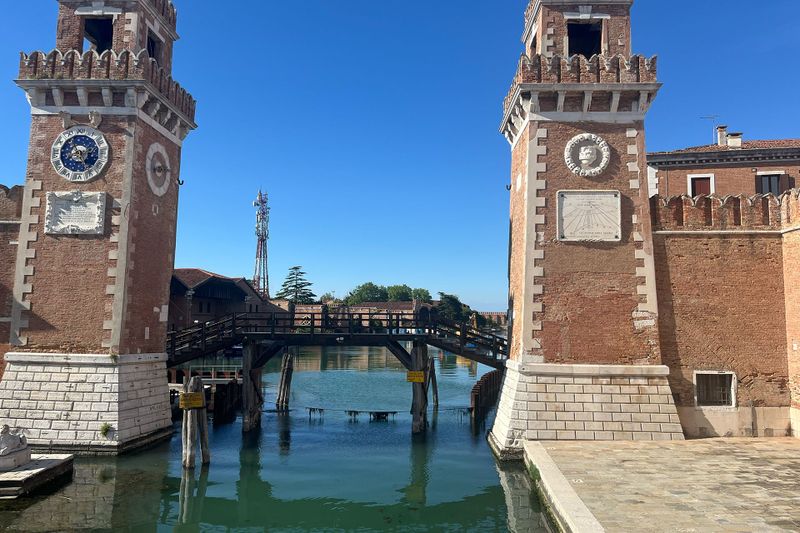
Discover the best national pavilions at the Arsenale during the Venice Biennale 2026. From Italy and UAE to China, Morocco and India, here is a guide to the most interesting exhibitions, artists and contemporary art installations to visit.
Hey travellers! If you are planning to visit the Venice Biennale 2026, the Arsenale is one of the places you absolutely should not miss. Located in the Castello district, this extraordinary historic complex offers one of the most fascinating settings for contemporary art in Venice, bringing together monumental installations, experimental projects and national exhibitions from different parts of the world.
The best pavilions Arsenale Biennale 2026 are particularly interesting for visitors who want to explore how artists interpret contemporary society through different cultural perspectives. The Italian Pavilion, the United Arab Emirates presentation, the exhibitions from Morocco, India and China, among others, offer an opportunity to discover a wide range of artistic languages, from sculpture and painting to multimedia installations and immersive experiences.
The 61st International Art Exhibition, titled In Minor Keys and conceived by curator Koyo Kouoh, takes place from 9 May to 22 November 2026. The exhibition extends across the Giardini, the Arsenale and other locations throughout Venice.
In this reviews by Venice Insider Guide, we focus specifically on the Biennale Arsenale 2026, helping you identify the top national pavilions worth including in your itinerary, understand what makes each exhibition distinctive and organise your visit to one of the most important contemporary art events in the world.
Pavilions Arsenale Biennale 2026
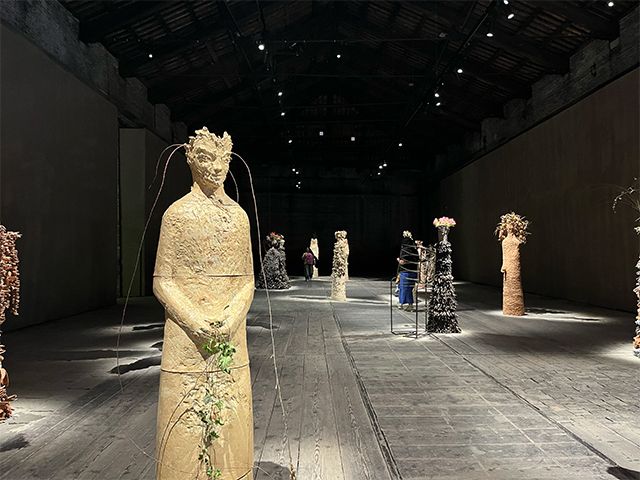
The best pavilions Biennale Arsenale 2026 include the national exhibitions of India, Morocco, Italy, China and UAE. Located in the historic Arsenale complex in Venice's Castello district, these exhibitions are part of the 61st International Art Exhibition, In Minor Keys, running from 9 May to 22 November 2026.
The Arsenale is open from 10:00 to 18:00 during the autumn season, with last admission at 17:45.
So, the Arsenale Venice Biennale 2026 is one of the two main venues of the 61st International Art Exhibition, running alongside the Giardini della Biennale as the backbone of this year's biennale. While the Giardini houses 30 permanent national pavilions in a leafy park setting, the Arsenale di Venezia delivers something rawer: a 500-meter procession through Venice's medieval shipyard, where contemporary art collides with centuries of maritime history. If you only have time for one venue, the Arsenale is where Biennale Arte 2026 hits hardest.
This article focuses specifically on what to see and how to navigate the Arsenale Biennale 2026, the primary exhibition venue that was added to the Biennale in 1980 and has since become the site of some of the most ambitious installations in the art world. The Arsenale has historic architecture that enhances the artistic experience at every turn, from the vaulted ceilings of the Corderie to the open-air courtyards of the Giardino delle Vergini.
Inside the Arsenale Venice Biennale 2026 area, you'll encounter immersive installations and large-scale artworks, a curated central exhibition, 33 national pavilions, scheduled performances, and outdoor spaces that blur the line between exhibition space and living monument. The 2026 Biennale theme is "In Minor Keys," curated by Koyo Kouoh, who is recognized as the first African woman to lead the Venice Biennale. The exhibition invites visitors to connect with less visible forms of cultural expression through whispered narratives, sonic landscapes, and works that reward patience over spectacle.
This guide does not rank individual artworks. Instead, it presents the best routes, zones, and experiences within the Arsenale to help visitors prioritize limited time. Think of each route as a lens: a different way to move through the same vast space depending on your interests, stamina, and schedule.
Biennale Arsenale 2026: why you should visit this exhibition area

The Arsenale is one of the two principal exhibition venues of the Venice Art Biennale, alongside the Giardini della Biennale. However, the atmosphere and architectural character of these two locations are quite different.
The Arsenale is a historic shipyard that played a fundamental role in the maritime and commercial history of the Venetian Republic. Its enormous industrial spaces, former workshops and monumental brick buildings now provide an extraordinary backdrop for contemporary artistic research.
During the Arsenale Venice Biennale 2026, visitors can explore the main international exhibition alongside numerous national participations. The result is a particularly varied itinerary, where large-scale installations, artistic experimentation, photography, sculpture, video and multidisciplinary projects interact with the architecture of the former shipyard.
One of the most interesting aspects of visiting this area is the opportunity to experience contemporary art in spaces that retain a strong historical identity. The contrast between the industrial heritage of Venice and the artistic languages of the 21st century makes the Arsenale an essential stop for anyone interested in the Biennale.
Best Pavilions Arsenale Biennale 2026: the exhibitions you should not miss
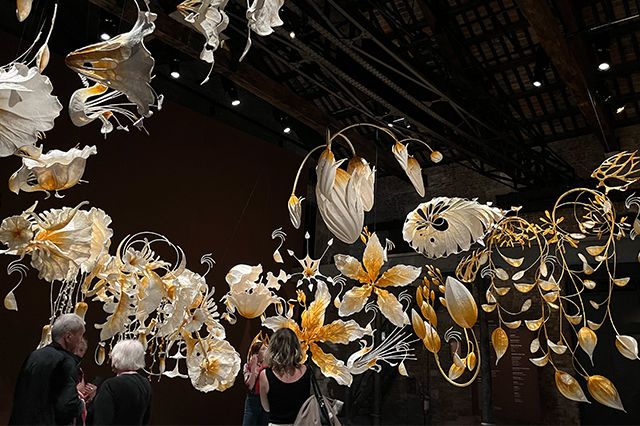
Choosing the best pavilions at the Arsenale Biennale 2026 is not simply a matter of identifying the most visually impressive exhibitions. The real value of the Venice Biennale lies in the stories behind the artworks, the cultural identities represented and the different ways artists interpret the world around them.
For the 2026 edition, several national presentations stand out for their artistic research, strong visual impact and ability to connect contemporary issues with historical memory.
Here is our selection of the best pavilions Biennale Arsenale 2026, with particular attention to the exhibitions that deserve a place on your itinerary.
1. Italian Pavilion - Con te con tutto
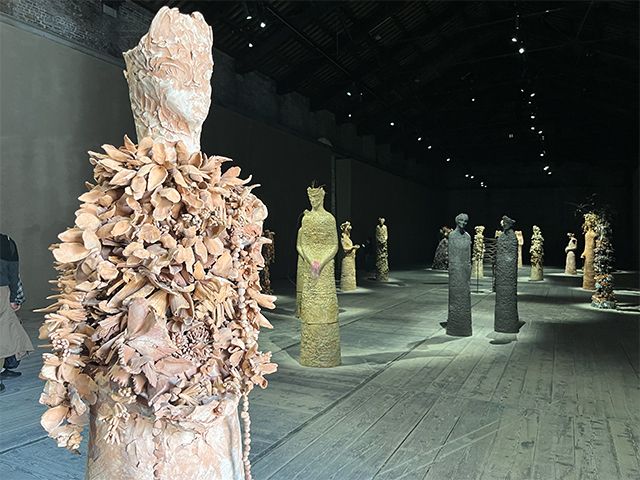
The Italian Pavilion is naturally one of the most anticipated stops during the Venice Biennale. In 2026, the country is represented by Chiara Camoni with Con te con tutto, a project curated by Cecilia Canziani.
Camoni's artistic practice is characterised by an interest in sculpture, natural materials, craftsmanship and the relationship between human beings and the surrounding environment.
Her work frequently brings together ceramic elements, organic forms and references to the natural world, creating compositions that encourage visitors to reconsider the boundaries between art, nature and everyday life.
The Italian presentation is particularly relevant within an edition of the Biennale that encourages reflection, attention and different ways of experiencing contemporary artistic practices.
Why visit? The Italian Pavilion is an essential stop for understanding the contribution of contemporary Italian art to the international exhibition. Chiara Camoni's material-based approach also makes it an interesting destination for visitors who appreciate sculpture and artistic experimentation.
Information:
- Country: Italy
- Artist: Chiara Camoni
- Exhibition: Con te con tutto
- Curator: Cecilia Canziani
- Location: Arsenale
2. United Arab Emirates Pavilion – Washwasha
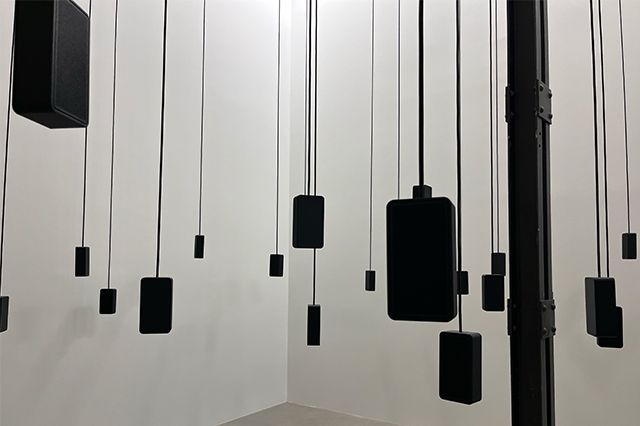
- Country: United Arab Emirates
- Exhibition: Washwasha
- Curator: Bana Kattan
- Location: Arsenale
The United Arab Emirates Pavilion is another presentation to look out for during the 2026 edition. Curated by Bana Kattan, Washwasha adds another voice to the international dialogue taking place inside the historic Arsenale.
The exhibition is particularly interesting for visitors wishing to explore the artistic perspectives emerging from the Middle East and the wider Gulf region.
Its inclusion in the Arsenale itinerary also highlights the international character of the Biennale, where established artistic scenes and different cultural perspectives meet in the same exhibition environment.
Why visit: It is a worthwhile stop for anyone interested in discovering contemporary artistic research from the United Arab Emirates and expanding their understanding of the region's cultural landscape.
3. Morocco Pavilion – Asǝṭṭa
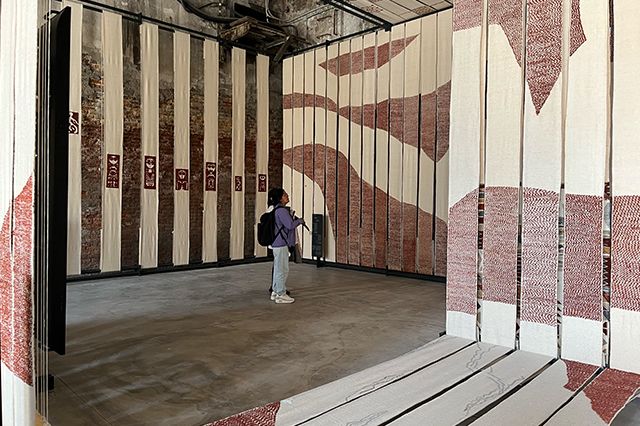
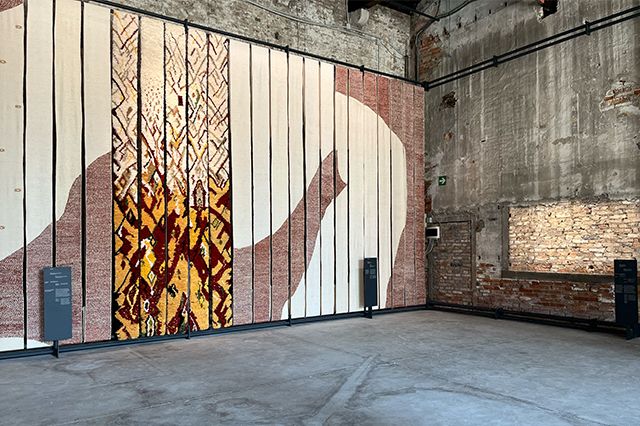
The Moroccan Pavilion is one of the most fascinating additions to the Arsenale Biennale 2026. With Asǝṭṭa, artist Amina Agueznay presents an ambitious installation that explores the relationship between traditional craftsmanship, cultural memory and contemporary art.
The title comes from the Amazigh language and refers to ritual weaving, an ancient practice that combines technical knowledge, prayer and collective memory. The project draws on Moroccan artisanal traditions and the artist's long-standing collaborations with local craftspeople and communities.
Inside the Sale dell'Artiglieria, the installation unfolds like a suspended architectural structure, creating an immersive environment that visitors can experience as a living textile landscape. Materials, gestures and traditional techniques become part of a wider reflection on the transmission of knowledge between generations.
The project also explores the concept of the threshold, understood as a space connecting different worlds: public and private, visible and invisible, past and present.
Why visit: The Moroccan Pavilion is particularly interesting for its combination of monumental installation and traditional craftsmanship. It offers a distinctive perspective on Moroccan cultural heritage, showing how ancestral techniques can become a powerful language of contemporary artistic expression.
Recap:
- Country: Morocco
- Artist: Amina Agueznay
- Exhibition: Asǝṭṭa
- Curator: Meriem Berrada
- Location: Arsenale, Sale dell'Artiglieria
4. India Pavilion – Geographies of Distance: Remembering Home
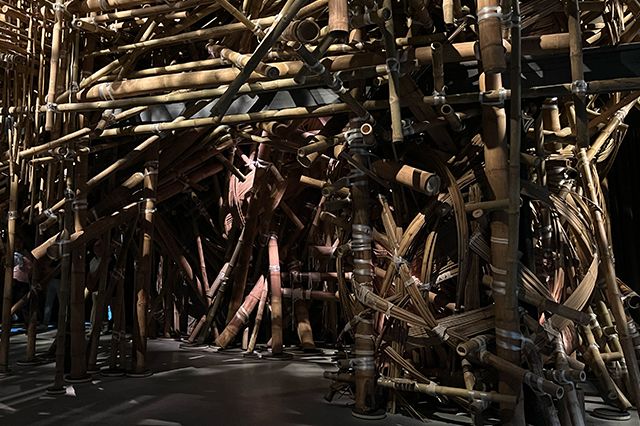
India returns to the Venice Biennale with a national pavilion that explores one of the most universal themes of human experience: the meaning of home.
- Country: India
- Artists: Alwar Balasubramaniam, Sumakshi Singh, Ranjani Shettar, Asim Waqif and Skarma Sonam Tashi
- Exhibition: Geographies of Distance: Remembering Home
- Curator: Amin Jaffer
- Location: Arsenale
Titled Geographies of Distance: Remembering Home, the exhibition considers how the idea of home changes through migration, memory, personal experiences and the transformations of contemporary society.
Five artists interpret this subject through different materials and artistic languages. Alwar Balasubramaniam works with clay to explore the fragility of the land, while Sumakshi Singh reconstructs a demolished family home through delicate thread structures. Ranjani Shettar creates a suspended garden using organic materials, and Skarma Sonam Tashi draws inspiration from the traditional architecture of Ladakh. Asim Waqif, meanwhile, uses bamboo to reflect on rapid urban development and the disappearance of traditional environments.
Together, these works create a multifaceted reflection on belonging, cultural continuity and the relationship between people and the places they consider home.
Why visit? The Indian Pavilion is particularly compelling because it addresses a universal experience through five distinct artistic perspectives. Its combination of traditional materials, contemporary installations and personal narratives makes it one of the most interesting national presentations at the Arsenale.
5. China Pavilion – Dream Stream

The Chinese Pavilion brings a particularly ambitious and multidisciplinary project to the Arsenale Biennale 2026 with Dream Stream.
Curated by Yu Xuhong, the exhibition brings together a large group of artists, designers, creative teams and researchers, creating a dialogue between contemporary art, digital culture, technology and new forms of visual expression.
- Country: China
- Exhibition: Dream Stream
- Curator: Yu Xuhong
- Commissioner: China Arts and Entertainment Group (CAEG)
- Location: Arsenale
Among the participants are Game Science, Feng Ji, Yang Qi, Yang Fudong and several other artists and creative groups. Their contributions reflect the diversity of China's contemporary creative landscape, connecting different artistic disciplines and approaches.
The exhibition is especially interesting for visitors who want to explore how traditional artistic practices interact with technological innovation and contemporary visual culture. Its multidisciplinary character also makes it a distinctive addition to the international programme of the 2026 Biennale.
Why visit: The Chinese Pavilion is worth including in your itinerary for its broad artistic approach and its exploration of the relationship between creativity, technology and contemporary culture. It offers an opportunity to discover different expressions of China's evolving art scene within the historic setting of the Venetian Arsenale.
How We Selected the Best Arsenale Biennale 2026
The Arsenale is vast and overwhelming. A first-time visitor walking straight through without stopping would cover roughly half a kilometer. Add detours into national pavilions, pauses for video works, and waits for performances, and you're looking at 3 to 5 kilometers of walking and 3+ hours of attention. A clear selection method helps you decide what to see first rather than wandering until fatigue wins.
Here are the criteria we used to evaluate and organize each route for best pavilions Arsenale Biennale 2026:
- Artistic significance and innovation. How do the installations, national presentations, and invited artists push boundaries in material, concept, or form?
- Relevance to the 2026 curatorial theme. The exhibition is organized around interconnected themes rather than a strict sequence, centering on memory, cultural identity, ecological crisis, and quiet resistance. Routes that illuminate these threads score higher.
- Use of the Arsenale's architecture and scale. The best experiences exploit the rope factories, dock spaces, and courtyards as active participants in the art, not just containers for it.
- Visitor experience. Crowding patterns, accessibility, clarity of layout, availability of seating and rest points, and proximity to restrooms or refreshments all affect how deeply you can engage with what you're seeing.
- Diversity of voices. Geographic range, generational spread, and media variety (video, sound, performance, sculpture, drawing) matter for a comprehensive experience of this international art exhibition.
- Practical impact on your visit. A good route helps structure your day efficiently, minimizing backtracking and maximizing meaningful encounters.
Our recommendations combine official La Biennale di Venezia materials, published curatorial statements, early-access reporting, and on-the-ground experience from past editions to anticipate common visitor needs in 2026.
How to choose the best pavilions at the Arsenale Biennale 2026

With so many national best pavilions Biennale Arsenale 2026 and contemporary art installations to explore, deciding where to spend your time can be challenging.
The best approach is to organise your visit around your artistic interests rather than trying to see absolutely everything. The Biennale Arsenale 2026 is a large exhibition complex, and taking time to appreciate individual projects makes the experience considerably more rewarding.
Here are some suggestions to help you choose the best pavilions Arsenale Biennale 2026.
If you are interested in history and cultural heritage: start with the Saudi Arabian Pavilion by Dana Awartani and the Irish Pavilion by Isabel Nolan. Both offer interesting connections between artistic practice, historical memory and cultural identity.
If you prefer immersive and experimental installations: include the Italian Pavilion by Chiara Camoni, the Chilean presentation by Norton Maza and the Argentinian exhibition by Matías Duville.
If you enjoy photography and personal storytelling: the Singapore Pavilion by Amanda Heng is particularly interesting, especially for its exploration of everyday life, the human body and the passage of time.
If you want to discover different international perspectives: consider the presentations from Peru, the Philippines, Albania, Mexico, Malta and New Zealand. These national participations help create a broader picture of contemporary artistic research around the world.
If you want to understand the overall vision of the 2026 Biennale: make sure you also explore the main In Minor Keys exhibition. The national pavilions are only one part of the experience.
Practical information for visiting the Arsenale Venice Biennale 2026
Before visiting the Arsenale Biennale 2026, it is useful to know a few practical details to organise your day and make the most of the exhibition.
Dates and opening hours
The 61st International Art Exhibition runs from 9 May to 22 November 2026.
As November is the final month of the exhibition, visitors should pay attention to the autumn opening schedule:
- Exhibition dates 9 May – 22 November 2026
- Opening hours 10:00–18:00
- Last admission 17:45
- Closing day Monday Exception Monday, 16 November
- Location Arsenale, Castello, Venice
The Arsenale and Giardini have the same autumn opening hours. The exhibition is generally closed on Mondays, with an exception on 16 November 2026.
Important: If you are visiting towards the end of November, remember that the last day of the Biennale is Sunday, 22 November 2026.
Where is the Arsenale Biennale 2026 in Venice?
The Biennale Arsenale 2026 is located in the Castello district, in the eastern part of Venice. It is easily accessible from the historic centre and is well connected by public water transport.
There are two official access points to the exhibition:
- Arsenale, Campo della Tana.
- Arsenale, Ponte dei Pensieri.
The Arsenale vaporetto stop is also conveniently located near the exhibition area.
How to get to the Arsenale Biennale 2026
The easiest way to reach the Arsenale depends on where you are staying in Venice.
- From Piazzale Roma: take ACTV vaporetto line 1 or 4.1 towards the Arsenale.
- From Venezia Santa Lucia railway station: take line 1 or 4.1.
- From San Marco: walk towards Riva degli Schiavoni and continue in the direction of Via Garibaldi and the Arsenale.
- From Rialto: enjoy a walk through the historic centre towards San Marco and Castello, or use the vaporetto network.
For the most convenient route, check the ACTV timetable on the day of your visit, particularly if you are travelling during busy exhibition periods.
How much time should you spend at the Arsenale Biennale 2026?
I recommend allowing at least three to four hours for the Arsenale if you want to explore the main international exhibition and several national pavilions.
If contemporary art is one of the main reasons for your trip to Venice, you could easily dedicate half a day or more to this exhibition area.
A useful strategy is to arrive in the morning, explore the national presentations that interest you most and leave enough time for the main In Minor Keys exhibition.
You should also consider that the Arsenale is only one part of the Venice Biennale. If you want to visit both major exhibition venues, plan a separate visit to the Giardini.
Discover the Best Pavilions Arsenale Biennale 2026 during your trip to Venice
The best pavilions Arsenale Biennale 2026 offer an extraordinary opportunity to discover contemporary art through different cultural perspectives, artistic languages and international experiences.
The main international exhibition, In Minor Keys, adds another dimension to the experience, bringing together artists from different backgrounds and encouraging visitors to look beyond conventional interpretations of contemporary art.
If you are visiting Venice before 22 November 2026, make sure you include the Arsenale in your itinerary. It is one of the most fascinating places to experience the artistic and cultural energy of the city.
And remember, the Arsenale Venice Biennale 2026 is also a wonderful opportunity to explore the Castello district, discover its quieter streets and experience a different side of Venice, away from the busiest tourist routes.
Arsenale Biennale 2026: frequently asked questions
What are the best pavilions at the Arsenale Biennale 2026?
Some of the most interesting national presentations include Saudi Arabia with Dana Awartani, Ireland with Isabel Nolan, Singapore with Amanda Heng, Italy with Chiara Camoni, Argentina with Matías Duville and Peru with Sara Flores. Each offers a different perspective on contemporary art, cultural identity and historical memory.
Is the Italian Pavilion at the Arsenale Biennale 2026?
Yes. Italy is represented at the Arsenale by artist Chiara Camoni with the exhibition Con te con tutto, curated by Cecilia Canziani.
What is the difference between the Giardini and the Arsenale?
The Giardini is the historic exhibition area of the Venice Biennale, famous for its permanent national pavilion buildings. The Arsenale is a former Venetian shipyard characterised by monumental industrial spaces, which host the main international exhibition and numerous national presentations.
How many national pavilions are at the Arsenale Biennale 2026?
The 2026 Biennale includes 100 national participations across Venice. According to the Venice Insider Guide's pavilion guide, 25 are located in the Arsenale exhibition area, with other presentations distributed between the Giardini and different venues throughout the city.
When does the Venice Biennale 2026 close?
The 61st International Art Exhibition closes on 22 November 2026. The final opening day is Sunday, and the autumn schedule is 10:00–18:00.
Can you visit the Arsenale Biennale 2026 and Giardini on the same day?
Yes, both venues can be visited on the same day, provided you have enough time. However, if you want to explore the exhibitions carefully, I recommend dedicating a separate visit to each location.
Final Thoughts on Experiencing the Arsenale at Biennale Arte 2026
The Arsenale Biennale 2026 is the art exhibition venue that most visitors remember longest after leaving Venice. Its scale, its roughness, and its layering of contemporary art over industrial heritage create an experience that the more polished Giardini cannot replicate.
In Biennale Arsenale 2026 will explore themes of memory and identity through a curatorial lens that asks you to slow down, listen, and notice what you might otherwise walk past. Every artist, every pavilion, every performance in the Arsenale exists in dialogue with the space and with every other work around it. Whether you spend two hours or an entire day, the building itself becomes part of what you take away.
There is no single "correct" way to see the best pavilions Arsenale Biennale 2026. The best route depends on each visitor's goals, curiosity, and pace. If you thrive on intensity and want immersion from the first moment, start at the Arsenale before the Giardini. If you prefer to build gradually, begin at the Giardini and save the Arsenale for the afternoon, when crowds thin and the long halls take on a different quality of light. Either way, give the Arsenale at least half a day. This is a present you give yourself - the chance to see how the world thinks about art, memory, conflict, and hope in a single, extraordinary space.
Even a partial visit to the best pavilions Biennale Arsenale 2026 can be deeply rewarding if planned with these routes in mind. Pick one route, commit to it, and stay open to the detours that catch your eye along the way. The best moments at the Biennale are almost always the ones you didn't plan for.
Don't miss the best pavilions Venice Biennale 2026 selected from Giardini and Arsenale in this final article.
Continue following Venice Insider Guide for more travel guides, cultural events, exhibitions and useful tips to discover Venice like a local.
We are Venice Insider Guide: follow us for next content!
- The photos of the best pavilions of the Biennale Arsenale 2026 in this article are the property of Venice Insider Guide.