
Hey dear travellers, discover the best 10 unusual things to do in Venice Italy in this update guide by Venice Insider Guide!
Venice is one of the most visited cities in the world, and most tourists follow the same route: Piazza San Marco, the Rialto Bridge, a gondola ride, Doge's Palace (built in 1340 in Venetian Gothic style), and maybe a quick trip to Murano for glass blowing. But, we go further.
That circuit covers roughly 10% of the city built on 118 islands. This guide covers the other 90%.
Let's find out togheter!
Unusual Things To Do In Venice, Italy: what to know
What to know about the unusual things to do in Venice Italy?
St. Mark's Basilica took over six centuries to complete, and it deserves the crowds it draws. But a few streets away, you can descend into a flooded crypt with no line. Across the Venetian lagoon, entire islands sit nearly empty.
Venice has a variety of unique experiences beyond major tourist attractions, and most of them cost less, take less time, and leave stronger impressions than standing in a queue at Mark's Square.
This list is for repeat visitors, first-timers who hate tourist crowds, photographers chasing quiet light, and foodies who want to dive deeper into the food scene than a plate of overpriced pasta near San Marco.
Every item here is doable on a 2 to 4 day trip, reachable by foot or vaporetto, and tested in multiple seasons.
Many work best during low season (October through March), when fog, rain, and acqua alta give Venice a mood no summer visit can replicate.
How We Chose These Unusual Things To Do In Venice Italy
Not every so-called hidden gem online is truly hidden. Libreria Acqua Alta, for example, stores books in gondolas and bathtubs and is considered one of the world's most unique bookstores, but it now appears on every "secret Venice" listicle and draws steady crowds. We used specific criteria to filter this list of the unusual things to do in Venice:
- Authenticity: Rooted in real Venetian life; workshops, neighborhoods, small museums, active craft traditions.
- Originality: Not in the first 10 results of a generic "things to do in Venice" search.
- Accessibility: No car needed. Reachable on foot or by vaporetto within 60 to 75 minutes of central Venice. Public transportation covers every item here.
- Season and weather proof: A mix of indoor and outdoor options that still work in fog, rain, or acqua alta.
- Value for time: Can be fit into a typical 2 to 4 day itinerary without exhausting transfers.
The list intentionally mixes islands, quirky museums, quiet districts, viewpoints, and hands-on experiences so readers with different interests can find their version of unusual things to do in Venice.
The Best 10 Unusual Things to Do in Venice, Italy
Below are 10 experiences loosely ordered from "easy to fit in for anyone" to "more niche or time-consuming." None rank by importance; all rank by how far off the beaten path they take you.
1. Explore the Flooded Crypt of San Zaccaria
The Church of San Zaccaria sits about a 5 to 10 minute walk from St Mark's Square in Castello. Most visitors who enter the free church never descend to the crypt below the choir. That crypt, dating to roughly the 10th or 11th century, holds the tombs of eight early Venetian doges, an altar, and a sculpture of the Virgin Mary. The flooded crypt of San Zaccaria has water lapping around stone columns and tombs for most of the year, creating mirror-like reflections across funerary architecture that few travelers ever see.
Why it's unusual things to do in Venice: Most Venetian crypts are dry. This one is semi-submerged as a natural consequence of acqua alta and rising sea levels. The flooding is not staged; it is the lagoon asserting itself inside a church.
Best for: History buffs, photographers, travelers visiting in cooler months (roughly November through March) when higher tides produce the most dramatic flooding.
Key details:
- Entrance to the crypt costs approximately €3, separate from the free church entry.
- Open daily 10:00 to 18:00; closed on major holidays.
- Waterproof shoes help if water is high. Steps can be slippery.
- Easily combined with a San Marco area visit.
2. Watch Gondolas Being Built at Squero di San Trovaso
Gondola boatyards are called squeri, and they are still in operation in Venice. Squero di San Trovaso is a gondola-making workshop from the 17th century, one of the last surviving working boatyards in a city that once had dozens. About 430 gondolas currently serve Venice; only a handful of squeri remain to build and repair them.
Why it's unusual things to do in Venice: Most visitors see gondolas from the passenger seat. Here, you see the raw woodwork, tools, and Alpine-style workshop architecture that keeps the craft alive.
Best for: Curious travelers, families with older kids, anyone fascinated by traditional trades.
Key details:
- Free to view from Fondamenta Bonlini or across the canal. No general drop-in admission to the workshop interior.
- Pre-booked guided visits in small groups are sometimes available; check ahead.
- Best on weekday mornings (8:30 to 11:30) when craftsmen are working. Weekends and holidays are often quiet.
- Combine with a stroll around Dorsoduro, a quieter neighborhood with authentic restaurants, and nearby Ponte dei Pugni.
3. Climb the Spiral Staircase at Scala Contarini del Bovolo
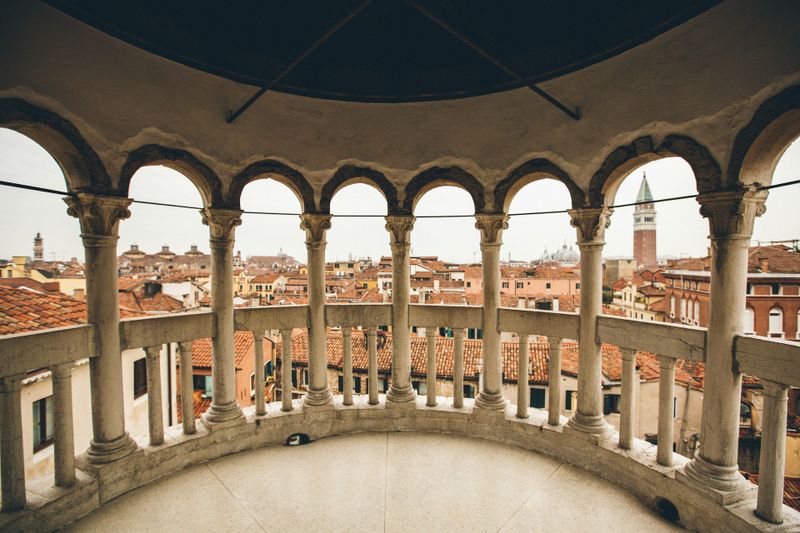
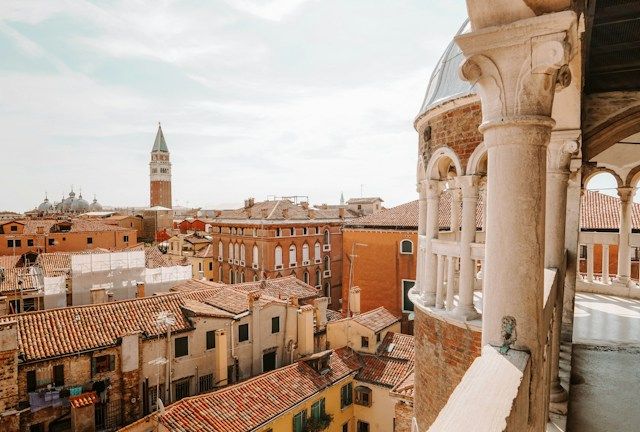
Tucked into a San Marco backstreet, the 15th-century Palazzo Contarini del Bovolo hides in plain sight. Scala Contarini del Bovolo features a spiral staircase built in the 15th century; the name "bovolo" means "snail" in Venetian dialect. From the top, you get a rooftop panorama without the long lines of the main bell tower at San Marco.
Why it's unusual things to do in Venice: Quirky Renaissance architecture most visitors walk right past. A viewpoint with no queue and no crowds.
Best for: Architecture lovers, photographers wanting soft light shots (early morning or late afternoon).
Key details:
- Entrance fee is around €8 to €10. Online timeslot booking recommended in busier months.
- Roughly 80 steps; not suitable for those with serious mobility issues.
- Takes about 20 to 30 minutes to explore.
4. Wander Venice's Original Ghetto in Cannaregio
Venice is the world's first official Jewish ghetto, established in 1516. The word "ghetto" itself comes from the Venetian word for the foundries that occupied this site centuries ago. Venice's Jewish community lived in this walled enclave under strict curfews, which forced buildings upward; some structures here are seven stories tall, rare for Venice.
Why it's unusual things to do in Venice: Synagogues hide behind plain facades. The campos are quieter than almost anywhere else in central Venice. The history is layered: medieval, Renaissance, WWII, and present-day Jewish residents still living in the neighborhood.
Best for: History buffs, cultural travelers, anyone interested in the Jewish quarter and its deep past.
Key details:
- Take a guided tour or visit the Jewish Museum to enter the synagogues, which are otherwise locked.
- Kosher bakeries and restaurants cluster around Gheto Novo. Evening atmosphere here is calm and local.
- Reachable on foot from Santa Lucia station in about 10 to 15 minutes.
5. Hunt for Venice's Last Railing-Free Bridge: Ponte de Chiodo
Ponte de Chiodo is the last bridge in Venice without railings. It spans a narrow canal in Cannaregio with stone steps and no safety barrier on either side, a reminder of how all Venetian bridges once looked.
Why it's unusual things to do in Venice: A rare surviving artifact of medieval Venetian infrastructure, unchanged while hundreds of other bridges added parapets.
Best for: Urban explorers, photographers, travelers who love small, specific "only in Venice" details.
Key details:
- Located near Fondamenta della Misericordia in Cannaregio. Walk north from the Ca' d'Oro vaporetto stop.
- Use caution on the steps, especially when wet.
- Combine with aperitivo along Fondamenta della Misericordia afterward; the bar scene there is lively and local.
6. Ride Up San Giorgio Maggiore's Bell Tower for a Crowd-Free View
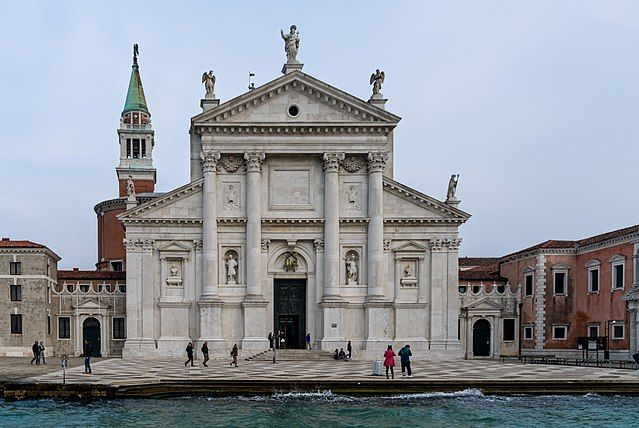
San Giorgio Maggiore sits on a small island directly opposite St. Mark's Square. Its Palladian church is visible from everywhere along the waterfront, but far fewer tourists actually go there. San Giorgio Maggiore offers 360-degree views from its bell tower, including the Grand Canal, the lagoon, Giudecca (a main island with a relaxed atmosphere), and the rooftops of central Venice.
Why it's unusual things to do in Venice: The bell tower at San Marco has long lines and a worse view (you cannot see San Marco itself from there). San Giorgio gives you the postcard shot of Venice, not a view of the crowd below.
Best for: First-time and repeat visitors wanting a panoramic shot without long lines.
Key details:
- Vaporetto line 2 from San Zaccaria; the ride takes about 3 minutes.
- Elevator access to the top; around €8 fee.
- Late afternoon or golden hour light turns the city pink and orange. Bring a camera with a decent zoom.
7. Time-Travel Through Venice's Naval Power at the Arsenale
The Arsenale was the shipbuilding engine of the Venetian Republic, covering docks, forges, ropewalks, and warehouses. At one point in the 15th century, the Arsenale could produce a fully outfitted warship in a single day using an assembly-line process that predated Henry Ford by four centuries. Today, parts serve as Biennale exhibition space; the Museo Storico Navale holds ship models, maps, and naval memorabilia.
Why it's unusual things to do in Venice: Venice left a deep mark on Mediterranean history through naval power. This is where that power was manufactured. The scale of the brick walls and water basins still conveys industrial ambition.
Best for: History and maritime buffs, families with older kids interested in ships, Venice home-base travelers with a few hours to spare.
Key details:
- Naval Museum: €17 full price; reduced €14 for students and seniors. Open 10:00 to 18:00 (summer) or 10:00 to 17:00 (winter). Closed Mondays.
- During the 2026 Art Biennale (May 9 to November 22), the Arsenale's exhibition halls open with expanded access. Outside Biennale, interior sections may be partially closed.
- Allow about 90 minutes for the museum, ships pavilion, and a walk along the fondamenta.
8. Experience Opera or a Quiet Tour at Teatro La Fenice
Teatro La Fenice has burned down and been promptly rebuilt multiple times; the 1996 arson fire destroyed the auditorium entirely, and it reopened in 2003. The current interior is a stucco-and-gilt reconstruction accurate to the 19th-century design. The Maria Callas exhibition focuses on the soprano's connection to Venice.
Why it's unusual things to do in Venice: Many tourists walk past without realizing they can step inside a working world-class theatre during the day for about €12.
Best for: Culture lovers, couples on a romantic trip, travelers visiting in colder months when evening indoor activities are ideal.
Key details:
- Daytime audio-guided tours: €12 full, €9 for over-65, €7 for students 7 to 26. Children under 6 enter free.
- Evening performances require advance booking; smart casual dress is sufficient for most shows.
- Rehearsals may restrict access to certain spaces; check ahead. Photography is permitted when performances are not in progress.
Caffè Florian was established in 1720, making it the second oldest coffee house in the world. It sits in the arcade of Piazza San Marco. An espresso there costs about €12 with the surcharge for the orchestra, but the history per sip is hard to beat.
9. Cruise to Torcello's Ancient Cathedral and Devil's Bridge
Torcello is an island that was an important early settlement before Venice developed. Today, Torcello is home to just 17 residents and a 7th-century cathedral. Torcello's Cathedral of Santa Maria Assunta dates back to the 7th century, with Byzantine mosaics that predate most of what you see in the main city. The island's Ponte del Diavolo (Devil's Bridge) is one of the few bridges in the lagoon with no railings, similar to Ponte de Chiodo.
Why it's unusual things to do in Venice: It feels rural and silent in a way that nothing in central Venice does. You are standing where Venice began.
Best for: History lovers, those already visiting Burano who can extend the trip, travelers wanting open horizons and silence.
Key details:
- Vaporetto connection via Burano; total travel time roughly 45 to 60 minutes each way from Venice.
- Small entrance fee for the cathedral and its bell tower. Appropriate clothing for a church visit.
- Go earlier in the day to avoid limited return-boat crowds. Nearby, Sant'Erasmo is known as Venice's agricultural island with vegetable gardens and orchards, accessible by a separate vaporetto line.
10. Visit the Cemetery Island of San Michele
Isola di San Michele is Venice's walled cemetery island, positioned between the city center and the northern lagoon. The cemetery is still in use today. Behind its cypress trees lie the graves of Igor Stravinsky, Sergei Diaghilev, Joseph Brodsky, and Ezra Pound.
Why it's unusual things to do in Venice: A small island devoted entirely to the dead, surrounded by water, with a quiet that is impossible to find in central Venice.
Best for: Travelers who enjoy contemplative walks, history lovers, those visiting in autumn or winter seeking calm.
Key details:
- Vaporetto from Fondamente Nove, about 5 to 10 minutes. The same line continues to Murano.
- Free entry. Dress modestly and speak quietly; this is an active cemetery.
- Pair with an afternoon exploring nearby Cannaregio, known for its local charm and far fewer tourists than San Marco
Quick Comparison: Unusual Things to do in Venice
Use this scan-friendly list to match each activity to your interests before reading the full entries above.
- Flooded crypt of San Zaccaria - Best for eerie, atmospheric photography and acqua alta curiosity.
- Squero di San Trovaso - Best for fans of craftsmanship and traditional boats.
- Scala Contarini del Bovolo - Best for quieter city views and architecture.
- San Michele cemetery island - Best for reflective walks and literary history on Isola di San Michele, a cemetery still in use today.
- Jewish Ghetto in Cannaregio - Best for deep historical context and culture.
- Ponte de Chiodo - Best for urban explorers seeking tiny, unique spots.
- Torcello - Best for early Venetian history, with just 17 residents and a 7th-century cathedral.
- San Giorgio Maggiore bell tower - Best for panoramic skyline views.
- Arsenale and Naval Museum - Best for maritime history fans.
- Teatro La Fenice - Best for evening culture and opera lovers.
How to Choose Which Unusual Things to Do in Venice
Most people visit Venice for 2 to 4 days. You cannot do all 10 items here, and you should not try. Pick a handful based on how long you are staying, what season it is, and what kind of traveler you are. Choose based on:
How Long You're Staying:
- 1 full day (no islands): Focus on near-center experiences. The San Zaccaria crypt, Scala Contarini del Bovolo, the Jewish Ghetto, and a Santa Croce wander all fit into a single day without a water taxi or vaporetto.
- 2 to 3 days: Add at least one outlying neighborhood experience plus a boat-based viewpoint. San Giorgio Maggiore's bell tower, a traghetto crossing, and Ca' Rezzonico make a strong second day. On day three, explore Venice further with the Arsenale or Fondazione Querini Stampalia.
- 4 or more days: Include at least one outer-lagoon island. Burano, Torcello, and San Michele are day trips that reward slow exploration. You can reach other islands like Murano (famous for glass making since 1291) on the same vaporetto route. The Peggy Guggenheim Collection in Dorsoduro, featuring works by Jackson Pollock and other modern art icons, is another option for an extra day.
Season and Weather:
- Autumn and winter (October through March): Indoor spaces shine. La Fenice, Ca' Rezzonico, Querini Stampalia, and Museo Fortuny are at their best when rain drives you inside. The San Zaccaria crypt floods more in these months, making it more visually striking. Cannaregio and Santa Croce feel especially local with no summer crowds.
- Spring (April through May): Comfortable for longer outdoor walks. Giardini della Biennale, Torcello, and the cemetery island are absolutely beautiful in mild weather. This is also when the Royal Gardens near San Marco reopen fully after winter.
- Summer (June through September): Heat and crowds concentrate around the main square and the north end of the Grand Canal. Emphasize shady museums, early-morning island visits, and evening outings. For a cool break, Gelatoteca Suso is a worthwhile stop for some of the best gelato in Venice. A private water taxi to San Giorgio Maggiore at sunset avoids the worst of the afternoon heat.
Your travel style:
- For culture and art lovers: Prioritize La Fenice, Museo Fortuny, Ca' Rezzonico, Querini Stampalia, and the Arsenale during Biennale years. Murano glass workshops offer hands-on glass blowing demonstrations at an extra cost.
- For photographers: Burano's back streets, San Giorgio's bell tower, Scala Contarini, San Zaccaria's crypt, Ponte de Chiodo, and the vegetable barge each offer shots you will not get at any main sights.
- For slow travelers and families: Santa Croce wandering, Giardini della Biennale, Torcello, San Michele, and neighborhood food stops let you move at your own pace. An in depth exploration of a single quiet canal neighborhood often makes Venice more memorable than rushing between monuments.
Which Unusual Things to do in Venice Is Best for You?
If you need a single combination to start planning your trip:
- Choose San Giorgio Maggiore's bell tower plus Squero di San Trovaso if you are a first-timer who wants iconic views but fewer crowds.
- Choose Jewish Ghetto plus Arsenale and Naval Museum if you care most about understanding Venice's history and power across centuries.
- Choose Burano, Torcello, and San Michele if you are staying 3 to 4 days and want slow, reflective lagoon time on other islands.
- Choose Museo Fortuny, Ca' Rezzonico, and Querini Stampalia if you love interiors, design, and a small museum with no crowds.
- Choose Santa Croce plus vegetable barge plus traghetto if your goal is to feel how Venetians live today, not just see monuments.
On a recent trip, spending a morning at the flooded crypt of San Zaccaria followed by an afternoon getting lost in Santa Croce produced a better day than any lineup of greatest-hits attractions could. That is the argument for this entire list: Venice rewards the traveler who walks one bridge too far.
Final Thoughts
Venice is not a city that reveals itself along the main route from the train station to Piazza San Marco.
What makes Venice incredibly unique is the density of strange, layered, contradictory life packed into a space smaller than most city parks. A crypt fills with seawater. A supermarket occupies a theatre. A boatyard builds vessels by hand using techniques unchanged for 300 years.
Pair two or three classic sights (St. Mark's, Doge's Palace, the Rialto Bridge) with at least three or four offbeat ideas from this list for a balanced itinerary. Then leave room for no plan at all. Allow time to get lost between these stops, because unplanned corners; a courtyard with a well, a quiet canal with no one on it, a bakery you stumble into at 7 a.m.; are often the part of Venice you remember longest.
Now, you know the best 10 unusual things to do in Venice and all the information for topic. Will you visit them?
Follow us Venice Insider Guide for similar contents!